If you’re searching for practical ways to create a more functional, stylish, and stress-free home, you’re in the right place. Modern living demands spaces that work smarter—not harder—whether that means seamless smart home integrations, space-saving layouts, or design choices that balance beauty with purpose. This article is built to help you simplify decisions and implement ideas that truly improve daily life.
Inside, you’ll find actionable strategies, from kitchen organization tips that maximize every drawer and cabinet to smart system integrations that enhance comfort and efficiency. We focus on realistic solutions, trend-backed insights, and functional space hacks that are easy to apply in homes of all sizes.
Our guidance is grounded in in-depth research on evolving décor trends, practical layout planning, and real-world usability testing. The goal is simple: give you clear, reliable insights so you can confidently transform your space into one that feels intentional, organized, and effortlessly livable.
A Practical Blueprint for Order
A cluttered kitchen drains time, spikes stress, and turns meals into battles. In other words, chaos isn’t just visual; it’s functional. So first, define a key term: a “home” means the single, logical place where an item always lives. When every tool has a home, decisions disappear.
For example, store knives near prep space and spices by the stove (yes, proximity matters). However, aesthetics alone won’t fix workflow. Instead, follow kitchen organization tips:
- Group items by task
- Keep counters clear
- Label shelves
clarity beats perfection, and systems beat spurts of motivation
The Foundation: A Ruthless Declutter and Strategic Zoning
In the hustle and bustle of a busy household, effective kitchen organization can streamline meal prep and declutter your space, making it all the more inviting for guests — much like how adding a few standout decor items can transform your living area, as explored in our article on the Top 10 Statement Pieces That Instantly Elevate Your Living Space.
If your kitchen feels chaotic, here’s the upside: a ruthless reset gives you time, clarity, and control every single day.
Start with a Clean Slate
Before organizing, purge. Tackle one small area at a time—a single drawer or shelf—to avoid overwhelm (decision fatigue is real). This builds momentum fast. When you see one tidy drawer, you’ll want another.
Use the Four-Box Method as you empty the space:
- Keep
- Donate/Sell
- Trash
- Relocate (for items that don’t belong in the kitchen)
The benefit? You stop storing things you never use. Less clutter means faster cooking and easier cleaning.
Establish Work Zones
Every efficient kitchen runs on zones. Think of it like a well-designed office—everything has a department.
- Prep Zone: Near the sink and trash, with cutting boards, knives, and mixing bowls.
- Cooking Zone: Around the stove/oven, with pots, pans, cooking utensils, and spices.
- Storage Zone (Consumables): Pantry and fridge for food items.
- Storage Zone (Non-Consumables): Cabinets for dishes, glasses, and small appliances.
Some argue zoning feels rigid. But in practice, it reduces steps, spills, and stress (your future self will thank you).
Actionable Tip: Store items directly within the zone where they are most frequently used. This single step eliminates unnecessary movement.
Among all kitchen organization tips, this one delivers the biggest daily payoff.
Unlocking Hidden Potential in Cabinets and Pantries
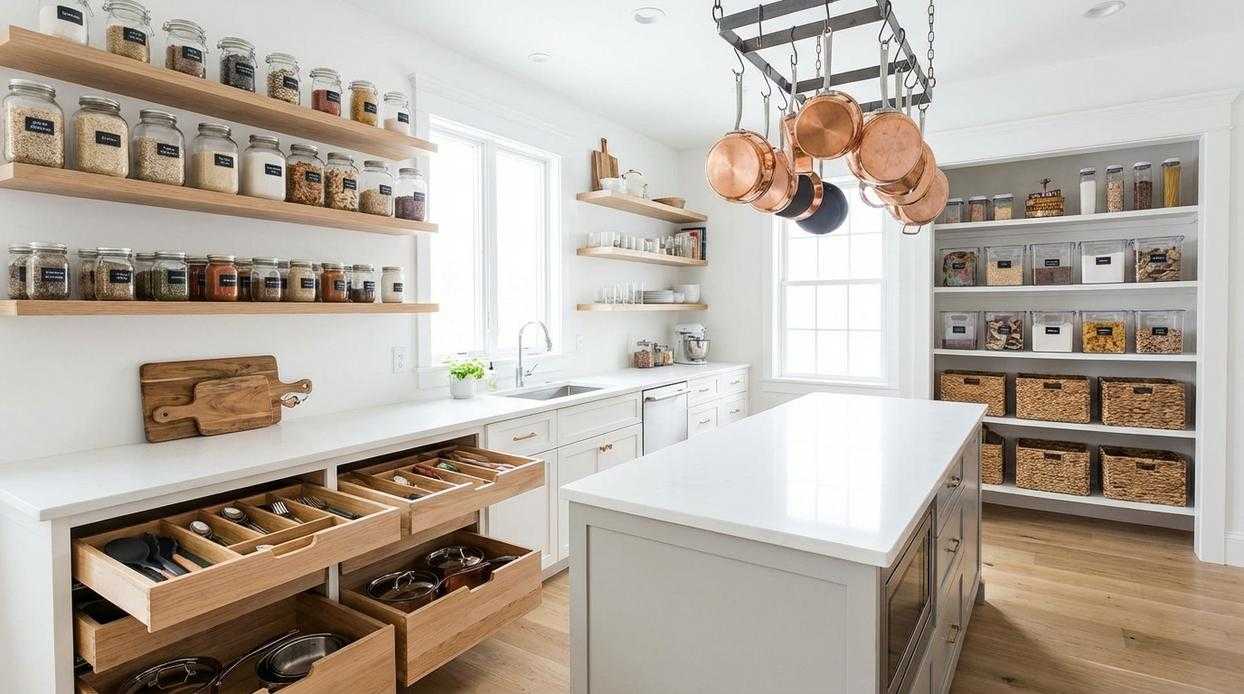
Space in tall cabinets is like unused vertical real estate in a city skyline; if you do not build upward, you are leaving value on the table. Wire shelf risers act like mezzanine floors, instantly doubling storage for plates and bowls. Meanwhile, under shelf baskets slide in like secret drawers, perfect for corralling napkins or foils that would otherwise drift.
However, deep cabinets can feel like black holes where containers vanish from memory. To counter that gravity, install pull out cabinet drawers or multi level lazy susans so everything rotates into view. It is the difference between rummaging in the dark and switching on the lights.
When it comes to pantry transformation, think of your shelves as a well run library. Decant dry goods into clear, airtight containers so ingredients stack neatly and freshness is preserved. Then, group like with like using bins for breakfast, baking, or snacks, turning chaos into curated sections. Finally, tiered shelving for canned goods works like stadium seating, ensuring every label takes center stage.
Admittedly, some argue that elaborate systems feel fussy or time consuming. Yet even small shifts create momentum; organization compounds like interest. Pro tip: label containers clearly to avoid guesswork later. In the end, these kitchen organization tips turn cramped cupboards into efficient command centers, making daily cooking flow with less friction. And once systems are in place, maintenance becomes as simple as returning books to their shelves after reading, not a dreaded weekend overhaul ever again.
Conquering Countertops and Taming Unruly Drawers
Walk into your kitchen and pause. What do you see? Counters crowded with gadgets, papers rustling near the toaster, drawers that clatter every time you pull them open? The Countertop Rule is simple: your countertop is workspace, not storage space. Clear surfaces feel lighter, look brighter, and even make your morning coffee taste calmer (yes, environment matters). Keep only daily-use items like a coffee maker or knife block within reach.
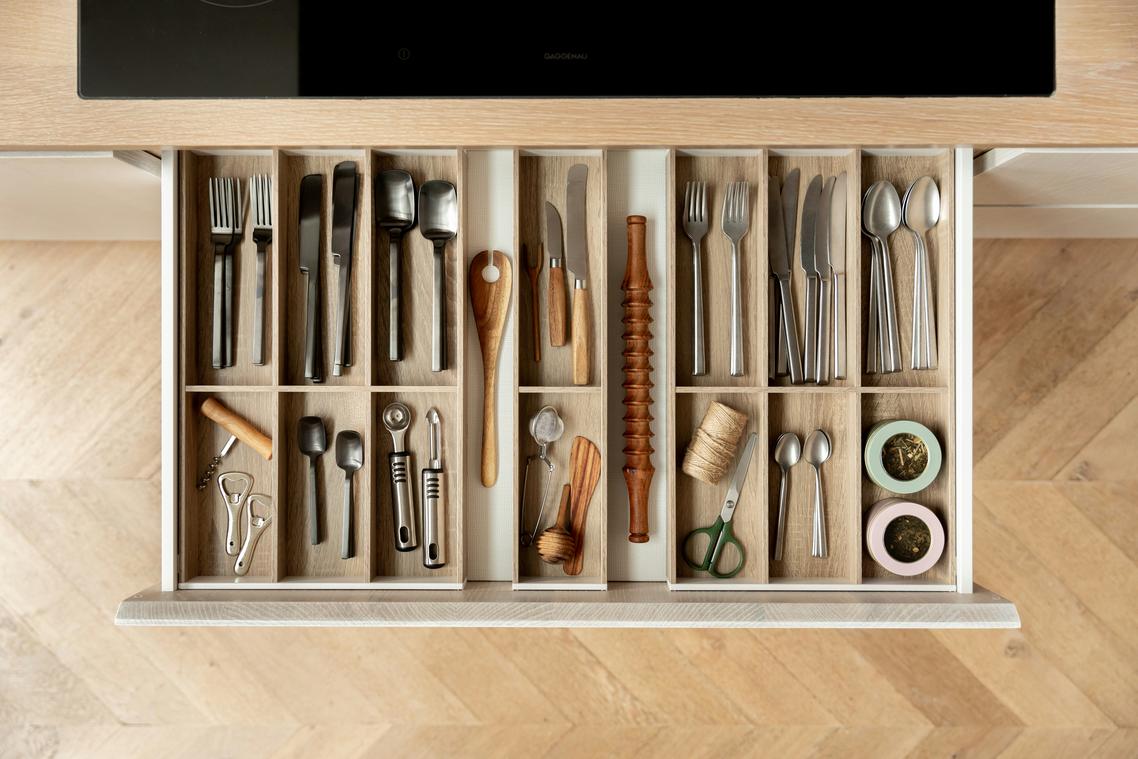
Some argue that keeping everything visible is convenient. But visual clutter creates mental clutter, and suddenly cooking feels chaotic instead of creative. Drawer dividers are essential. Adjustable sections give each fork, whisk, and random battery a defined home. When utensils don’t scrape and slide, the quiet order is almost soothing.
For deep drawers, try two-tiered organizers; they glide smoothly and double your space. Bulky tools? A stylish crock keeps spatulas upright and easy to grab. And for knife safety and space, a magnetic strip frees drawers while keeping blades cool to the touch and safely elevated.
If you’re already rethinking layouts, explore turning awkward corners into practical storage solutions.
These small kitchen organization tips transform noise into calm—one drawer at a time.
Advanced Hacks for Underutilized Spaces
In many urban apartments—think compact Brooklyn brownstones or downtown L.A. condos—the kitchen’s tight footprint demands strategy, not square footage. Maximize the “Under-Sink” Zone: This area is often chaotic. Use a tension rod to hang spray bottles by their triggers, freeing up the cabinet floor. Add stackable, clear drawers for sponges, dishwasher pods, and cleaning supplies. (Yes, even that random grout brush you forgot you owned.)
Leverage Your Walls: Don’t forget vertical real estate. Install a pegboard with hooks for hanging pots, pans, and measuring cups. Add a few small floating shelves near the prep zone for frequently used oils and spices—restaurant chefs call this keeping essentials within the “golden triangle.”
The Inside of Cabinet Doors: Attach small racks to store spice jars, pot lids, or cutting boards.
These aren’t just kitchen organization tips—they’re spatial efficiency upgrades pros swear by.
Maintaining an effortless system isn’t about perfection; it’s about rhythm. Think of it like resetting your kitchen the way Marie Kondo meets The Home Edit (minus the TV drama). Intentional Maintenance means small, repeatable actions that protect your progress.
Use the ‘One-In, One-Out’ rule. Buy a new mustard? Toss the old one. No negotiations.
Try a 5-Minute Reset each night:
• Clear counters
• Return items home
• Wipe surfaces
These kitchen organization tips work because they’re boringly consistent (and boring works).
Some argue habits fade. True—unless they’re tiny. Keep them simple, and your space stays calm, functional, and drama-free.
Bring Order Back to Your Kitchen for Good
You came here looking for practical ways to create a kitchen that feels calm, functional, and easy to manage. Now you have a clear path forward — from decluttering with purpose to applying kitchen organization tips that actually make daily life smoother.
An overcrowded, chaotic kitchen doesn’t just waste space — it wastes time and energy. When drawers are disorganized and counters are cluttered, even simple meals feel stressful. The good news? Small, strategic changes can completely transform how your kitchen works for you.
Start by implementing one or two of these systems today. Clear a single drawer. Add dividers. Rethink how you store everyday essentials. Momentum builds quickly when you see immediate results.
If you’re ready to stop feeling overwhelmed every time you walk into your kitchen, take the next step now. Explore more expert-backed space solutions and smart home strategies designed to simplify your life. Join thousands of homeowners already upgrading their spaces with proven, practical guidance — and start creating a kitchen that finally works as beautifully as it looks.
 Décor & Functional Living Editor
Monica Hollandaverso writes the kind of prist décor and style trends content that people actually send to each other. Not because it's flashy or controversial, but because it's the sort of thing where you read it and immediately think of three people who need to see it. Monica has a talent for identifying the questions that a lot of people have but haven't quite figured out how to articulate yet — and then answering them properly.
They covers a lot of ground: Prist Décor and Style Trends, Smart Home System Integrations, Liv-Inspired Living Concepts, and plenty of adjacent territory that doesn't always get treated with the same seriousness. The consistency across all of it is a certain kind of respect for the reader. Monica doesn't assume people are stupid, and they doesn't assume they know everything either. They writes for someone who is genuinely trying to figure something out — because that's usually who's actually reading. That assumption shapes everything from how they structures an explanation to how much background they includes before getting to the point.
Beyond the practical stuff, there's something in Monica's writing that reflects a real investment in the subject — not performed enthusiasm, but the kind of sustained interest that produces insight over time. They has been paying attention to prist décor and style trends long enough that they notices things a more casual observer would miss. That depth shows up in the work in ways that are hard to fake.
Décor & Functional Living Editor
Monica Hollandaverso writes the kind of prist décor and style trends content that people actually send to each other. Not because it's flashy or controversial, but because it's the sort of thing where you read it and immediately think of three people who need to see it. Monica has a talent for identifying the questions that a lot of people have but haven't quite figured out how to articulate yet — and then answering them properly.
They covers a lot of ground: Prist Décor and Style Trends, Smart Home System Integrations, Liv-Inspired Living Concepts, and plenty of adjacent territory that doesn't always get treated with the same seriousness. The consistency across all of it is a certain kind of respect for the reader. Monica doesn't assume people are stupid, and they doesn't assume they know everything either. They writes for someone who is genuinely trying to figure something out — because that's usually who's actually reading. That assumption shapes everything from how they structures an explanation to how much background they includes before getting to the point.
Beyond the practical stuff, there's something in Monica's writing that reflects a real investment in the subject — not performed enthusiasm, but the kind of sustained interest that produces insight over time. They has been paying attention to prist décor and style trends long enough that they notices things a more casual observer would miss. That depth shows up in the work in ways that are hard to fake.