If your smart home still relies on one-off voice commands, you’re only scratching the surface of what’s possible. Many setups feel like a scattered mix of apps and gadgets—functional, but far from seamless. This guide goes beyond simple controls to show you how to design powerful, multi-step smart home automation routines that work together intelligently. By learning to think in terms of triggers and actions, you’ll create systems that anticipate your needs, save energy, and simplify your day. Follow these practical principles to transform disconnected devices into a truly responsive, intuitive living environment.
The Foundation: Understanding Triggers, Conditions, and Actions
At its core, every automation works like a simple recipe: a Trigger starts the process, and one or more Actions follow. However, the real intelligence appears when you layer in Conditions. Together, these three elements form the backbone of smart home automation routines.
First, let’s define the trigger. A Trigger is the event that kicks everything off. This could be a specific time (7 AM on weekdays), a sensor reading (motion detected), your phone’s GPS location (arriving home), or even pressing a smart button. In other words, it’s the “when this happens” part of the equation.
Next come the actions. An Action is what your system actually does: adjusting lights, setting the thermostat to 72°F, locking doors, playing a favorite playlist, or closing blinds. These aren’t just flashy features—they deliver comfort, energy savings, and peace of mind (no more midnight thermostat checks).
Finally, conditions add precision. A Condition means an action runs only if certain criteria are met. For example: IF it’s after sunset AND motion is detected, THEN set hallway lights to 30%. This prevents unnecessary activations during daylight.
Of course, some argue manual control is simpler. Yet automation reduces decision fatigue and boosts efficiency when configured properly. Pro tip: review common smart home integration mistakes and how to avoid them (https://livpristhome.com/common-smart-home-integration-mistakes-and-how-to-avoid-them/) before building complex sequences.
Your First High-Impact Sequences: Practical, Step-by-Step Routines
Getting started with smart home automation routines doesn’t mean overhauling your entire house. In fact, the most effective setups are simple, repeatable, and built around moments you already experience every day.
The “Good Morning” Sequence
Trigger: 6:30 AM on weekdays
Actions:
- Slowly fade up bedroom lights over 5 minutes.
- Set thermostat to 70°F.
- Start a “Morning” playlist on the bedroom speaker at low volume.
- Turn on the smart plug connected to the coffee maker.
This works because it supports your body’s natural wake cycle. Gradual light signals your brain to reduce melatonin (National Sleep Foundation), making mornings feel less abrupt. If you’re worried it’s “too automated,” remember—you can still hit snooze (we’re optimizing life, not removing free will).
The “I’m Leaving” Sequence
Trigger: Voice command “Hey Google, I’m leaving”
Actions:
- Turn off all lights and smart plugs.
- Set thermostat to “Eco” mode.
- Lock all smart locks.
- Arm the security system to “Away.”
Energy.gov notes that adjusting your thermostat 7–10°F for 8 hours daily can save up to 10% annually on heating and cooling. One command replaces four separate checks—and eliminates that “Did I lock the door?” anxiety.
The “Movie Night” Scene
Trigger: Voice command “Hey Alexa, it’s movie time”
Actions:
- Turn off all lights except the living room TV backlights.
- Dim TV backlights to a warm blue at 20% brightness.
- Close the smart blinds.
- Set the smart soundbar to “Cinema” mode.
Bias lighting reduces eye strain (Harvard Health), while dimmed surroundings improve contrast perception. The result? A theater vibe without leaving your couch (popcorn optional, but encouraged).
Advanced Automation: Creating a Truly Responsive Environment
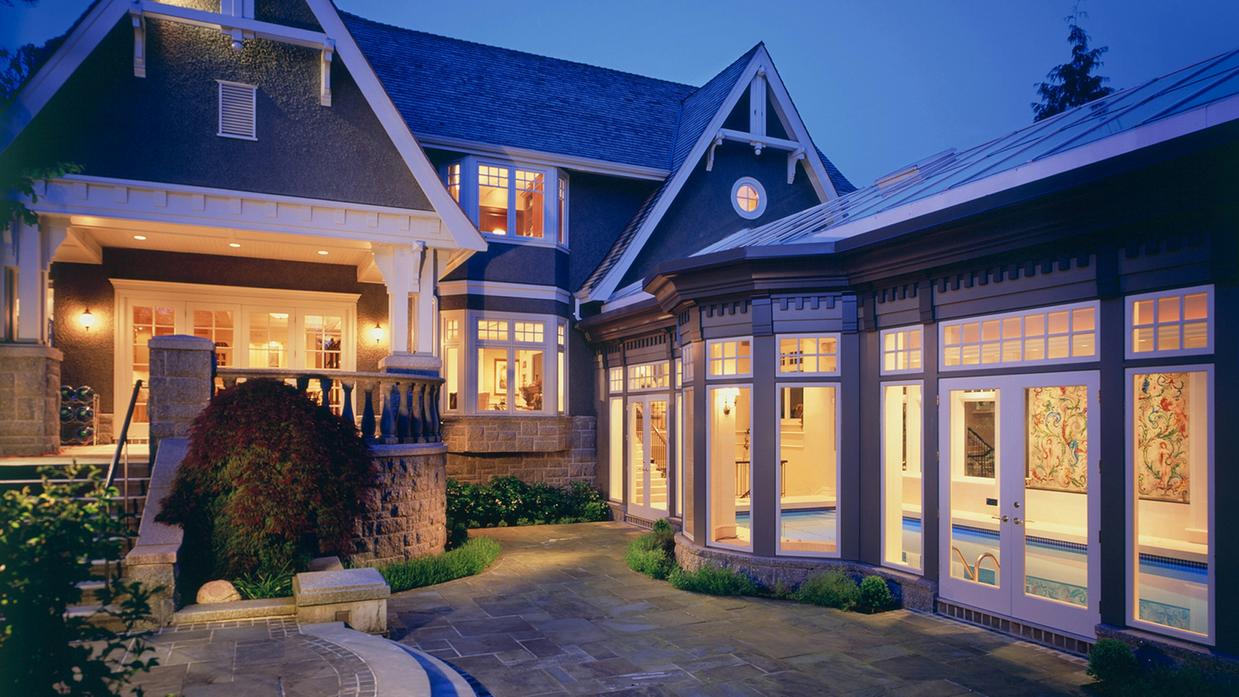
Advanced automation sounds complicated, but at its core, it simply means your home makes decisions based on context—not just commands. Instead of reacting to a button press, it evaluates conditions and responds intelligently.
Leveraging Sensors for Predictive Actions
First, let’s clarify what a sensor does. A sensor detects a specific change—like motion, temperature, or whether a door is open—and reports that data to your system. For example, place a contact sensor on a window. If the window stays open for more than five minutes, your HVAC can automatically pause. This prevents wasted energy (and those painful utility bills). According to the U.S. Department of Energy, heating and cooling account for about 50% of home energy use, so small automations can have meaningful impact.
Layering Multiple Conditions for Precision
Conditions are rules that must be true before an action happens. Think of them as “AND” statements in logic.
IF the time is between 11 PM and 5 AM AND the garage door opens
THEN turn on all downstairs lights to 100% and send a critical alert to my phone.
This layered logic reduces false alarms and creates smarter responses. (It’s less “Home Alone” chaos and more calculated awareness.)
Location-Based (Geofencing) Magic
Geofencing uses your phone’s location to trigger events when you enter or leave a virtual boundary. For instance, when you arrive home after sunset, lights turn on, the door unlocks, and the thermostat adjusts. No buttons required.
Integrating “Dumb” Devices
Finally, smart plugs act as bridges for non-smart devices. A standard fan can switch on automatically if a temperature sensor reads above 75°F.
In short, well-designed smart home automation routines transform isolated gadgets into a coordinated system that actually thinks ahead.
Best Practices: Avoiding Conflicts and Ensuring Reliability
Even the best smart home automation routines can clash if you don’t plan ahead. Preventing “automation collisions” ensures your home behaves predictably, not like it has a mind of its own. For example, give your “I’m Leaving” routine priority over an “Evening” schedule so lights don’t flip back on. The benefit? Fewer surprises and lower energy bills.
Building in small delays—like 30 seconds before auto-locking—adds comfort and flexibility (no frantic door juggling).
Finally, create a manual “Everything Off” switch. That simple override delivers peace of mind and instant control when you need it most.
From a Smart House to an Intelligent Home
You set out to transform your space into something more than connected devices—you wanted a home that truly thinks ahead. Now you have the blueprint to make that happen, using intentional smart home automation routines that shift you from constant manual control to seamless, intelligent living.
Yes, the initial setup can feel overwhelming. So many devices. So many possibilities. But when you begin with simple sequences like “Good Morning” or “I’m Leaving,” you create instant momentum and real-life convenience you can feel right away.
Start small this week. Automate one room or one daily habit. Refine it. Experience it. Then build from there. The comfort, efficiency, and control you’ve been wanting are just one routine away—take the first step today.
 Founder & Creative Director
Tavien Veyland has opinions about liv-inspired living concepts. Informed ones, backed by real experience — but opinions nonetheless, and they doesn't try to disguise them as neutral observation. They thinks a lot of what gets written about Liv-Inspired Living Concepts, Smart Home System Integrations, In-Depth Guides is either too cautious to be useful or too confident to be credible, and they's work tends to sit deliberately in the space between those two failure modes.
Reading Tavien's pieces, you get the sense of someone who has thought about this stuff seriously and arrived at actual conclusions — not just collected a range of perspectives and declined to pick one. That can be uncomfortable when they lands on something you disagree with. It's also why the writing is worth engaging with. Tavien isn't interested in telling people what they want to hear. They is interested in telling them what they actually thinks, with enough reasoning behind it that you can push back if you want to. That kind of intellectual honesty is rarer than it should be.
What Tavien is best at is the moment when a familiar topic reveals something unexpected — when the conventional wisdom turns out to be slightly off, or when a small shift in framing changes everything. They finds those moments consistently, which is why they's work tends to generate real discussion rather than just passive agreement.
Founder & Creative Director
Tavien Veyland has opinions about liv-inspired living concepts. Informed ones, backed by real experience — but opinions nonetheless, and they doesn't try to disguise them as neutral observation. They thinks a lot of what gets written about Liv-Inspired Living Concepts, Smart Home System Integrations, In-Depth Guides is either too cautious to be useful or too confident to be credible, and they's work tends to sit deliberately in the space between those two failure modes.
Reading Tavien's pieces, you get the sense of someone who has thought about this stuff seriously and arrived at actual conclusions — not just collected a range of perspectives and declined to pick one. That can be uncomfortable when they lands on something you disagree with. It's also why the writing is worth engaging with. Tavien isn't interested in telling people what they want to hear. They is interested in telling them what they actually thinks, with enough reasoning behind it that you can push back if you want to. That kind of intellectual honesty is rarer than it should be.
What Tavien is best at is the moment when a familiar topic reveals something unexpected — when the conventional wisdom turns out to be slightly off, or when a small shift in framing changes everything. They finds those moments consistently, which is why they's work tends to generate real discussion rather than just passive agreement.