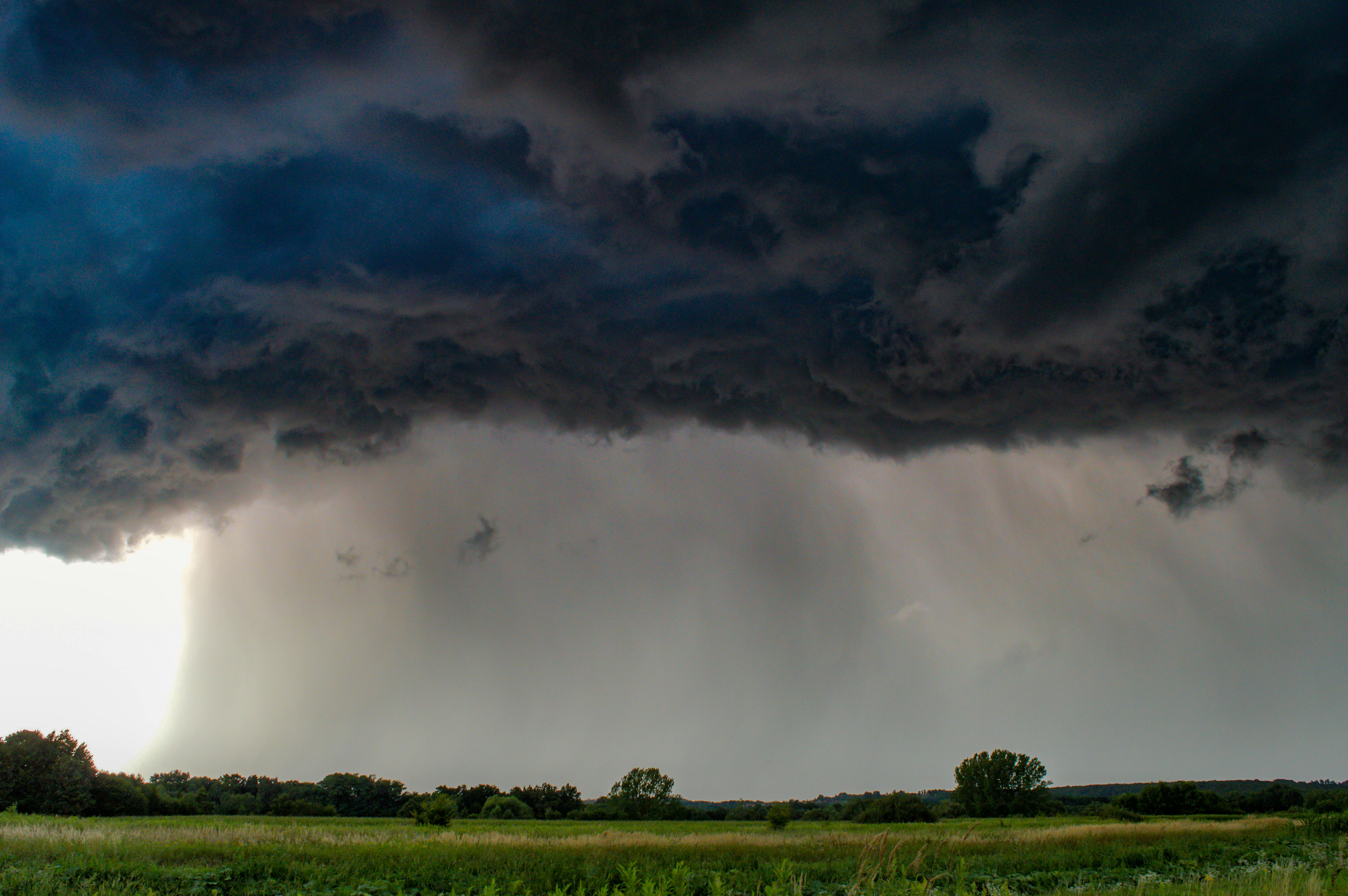
The approaching hurricane season brings a familiar sense of dread to coastal communities. You watch the weather reports closely, track the cone of uncertainty, and mentally prepare for the annual scramble to secure your property. The rush to home improvement stores for supplies is exhausting, and the physical toll of preparing your house often feels like a storm of its own.
This year demands more than just a passing thought. Early preparation is essential. NOAA predicts a 60% chance of an above-normal 2025 Atlantic hurricane season, forecasting 13 to 19 total named storms. That volume of storm activity means your property will likely face severe weather threats in the coming months.
The Hidden Costs and Dangers of Plywood
Most coastal homeowners know the misery of wrestling with heavy plywood sheets in the sweltering heat. The back-breaking labor of measuring, cutting, lifting, and anchoring these thick boards is an ordeal that can take an entire weekend. Plywood is incredibly cumbersome, often requiring two or more people just to hoist a single sheet into place over a second-story window.
Beyond the immediate physical strain, this outdated method damages your home. Repeatedly drilling heavy bolts or screws into your exterior walls creates weak points in your stucco or siding. Over time, these holes invite moisture intrusion, leading to hidden mold, structural rot, and expensive repair bills long after the storm has passed.
Even worse, plywood simply does not provide the safety guarantees you expect. Standard thick plywood fails to deliver adequate impact resistance under extreme pressure. Researchers have proven this vulnerability through rigorous safety evaluations.
Specifically, under FEMA 320 testing conditions (simulating 15lb timber missiles at 100mph), standard thick plywood fails to provide adequate impact resistance, warping and succumbing to rot after exposure to severe rain. When you factor in the labor, the damage to your exterior, and the verified safety risks, plywood reveals itself as a poor defense strategy.
The Storm Protection Options Worth Knowing Before Hurricane Season
Advancements in materials science have completely transformed how we secure coastal homes. You no longer need to rely on temporary, disposable barriers. Modern engineering has introduced lightweight, permanent, and semi-permanent solutions that effectively eliminate the chaotic pre-storm rush.
While traditional methods often require hours of back-breaking labor and turn your home into a dark cave, modern advancements have introduced lightweight, high-strength alternatives. Homeowners are increasingly turning to innovative storm protection options such as roll-down hurricane screens that take minutes to deploy and maintain natural light during a storm.
To help you make an informed decision for your home, review this breakdown of the top modern categories available on the market.
| Protection Type | Impact Resistance | Light Transmission | Deployment Speed |
|---|---|---|---|
| Traditional Plywood | Low (Fails FEMA 320) | None (Dark Cave) | Very Slow (Hours/Days) |
| Metal Panels | Moderate (Prone to dents) | None (Dark Cave) | Slow (Hours) |
| Accordion Shutters | High | None (Dark Cave) | Fast (Minutes) |
| Fabric Screens | Very High (Absorbs impact) | High (Allows visibility) | Very Fast (Minutes) |
Metal Panels and Accordion Shutters
Rigid metal systems, like corrugated steel panels and accordion shutters, have been industry standards for decades. They work by creating a hard physical barrier over your windows and doors to protect the building envelope. Accordion shutters permanently attach to the home and glide along a track, while metal panels require manual hanging on pre-installed bolts before a storm.
Despite their popularity, these metal systems share a major functional limitation. They block out absolutely all natural light. When you secure these rigid systems, you lock yourself in a dark, claustrophobic environment. If the power grid goes down—which is highly likely during a hurricane—you are left sitting in complete darkness with zero outward visibility for days.
Furthermore, rigid metal is highly susceptible to structural damage. Kinetic energy from flying debris transfers directly into the metal. Under extreme high-velocity impacts, aluminum and steel systems can easily dent, warp, or even tear entirely off their tracks, compromising the safety of your home.
Flexible Fabric Screens (The “Anti-Cave” Solution)
Flexible hurricane fabric represents a massive leap forward in building envelope protection. These tightly woven, resin-coated systems easily protect windows, expansive lanais, patios, and entryways. Instead of relying on a hard, unyielding surface, this specialized fabric uses advanced physics to keep your home safe.
Unlike rigid metal, flexible fabric is specifically engineered to absorb and dissipate the impact of flying debris. Think of it like a heavy-duty trampoline. When a piece of airborne debris strikes the screen, the material flexes slightly, catching the object and dispersing the kinetic energy across the entire woven surface. This prevents the debris from shattering the glass behind it or tearing through the barrier.
The most celebrated feature of this technology is the “Anti-Cave” benefit. The see-through material allows natural light to enter the home and maintains your outward visibility. You can actually safely watch the storm pass from inside your living room, completely eliminating the dreaded dark cave effect and reducing storm anxiety.
These screens also offer incredible dual-purpose functionality for everyday living. When deployed on sunny days, these screens block up to 91% of damaging UV rays. This drastically reduces solar heat transfer, keeps your patio cooler, and protects your expensive interior furniture from fading year-round.
Motorized vs. Manual Roll-Down Systems
When choosing a roll-down screen system, many homeowners are initially drawn to the convenience of motorized deployment. The idea of securing your house with the push of a remote-control button sounds incredibly appealing. However, motorized systems come with high ongoing maintenance costs and a dangerous reliance on electricity.
A “manual is smarter” approach is simply safer during a hurricane event. Simplicity equals reliability. A manual crank system guarantees that you can deploy or retract your screens regardless of the local power grid’s status. There are no delicate electronic components to short out and no expensive motors to repair after a power surge.
Manual systems also offer significant financial advantages right out of the box. They present a clear cost-saving DIY installation potential for handy homeowners. By installing a manual crank system yourself, you can easily save $45–$100 per hour by eliminating expensive professional installation fees.
Conclusion
There is absolutely no need to dread storm preparation or rely on outdated, heavy plywood ever again. The era of wrestling with dangerous power tools in the humid pre-storm rush is behind us. By evaluating your options early, you can take control of your property’s safety and your own peace of mind.
Adopting modern solutions like manual roll-down fabric screens offers clear advantages. You gain the simplicity of a reliable hand-crank deployment, the comfort of natural light inside your home, and extreme durability against high-velocity impacts. These upgrades protect your family while lowering your insurance premiums.
 Smart Home Systems & Integration Specialist
Herbert Hamiltonatier is the kind of writer who genuinely cannot publish something without checking it twice. Maybe three times. They came to smart home system integrations through years of hands-on work rather than theory, which means the things they writes about — Smart Home System Integrations, In-Depth Guides, Highlight Hub, among other areas — are things they has actually tested, questioned, and revised opinions on more than once.
That shows in the work. Herbert's pieces tend to go a level deeper than most. Not in a way that becomes unreadable, but in a way that makes you realize you'd been missing something important. They has a habit of finding the detail that everybody else glosses over and making it the center of the story — which sounds simple, but takes a rare combination of curiosity and patience to pull off consistently. The writing never feels rushed. It feels like someone who sat with the subject long enough to actually understand it.
Outside of specific topics, what Herbert cares about most is whether the reader walks away with something useful. Not impressed. Not entertained. Useful. That's a harder bar to clear than it sounds, and they clears it more often than not — which is why readers tend to remember Herbert's articles long after they've forgotten the headline.
Smart Home Systems & Integration Specialist
Herbert Hamiltonatier is the kind of writer who genuinely cannot publish something without checking it twice. Maybe three times. They came to smart home system integrations through years of hands-on work rather than theory, which means the things they writes about — Smart Home System Integrations, In-Depth Guides, Highlight Hub, among other areas — are things they has actually tested, questioned, and revised opinions on more than once.
That shows in the work. Herbert's pieces tend to go a level deeper than most. Not in a way that becomes unreadable, but in a way that makes you realize you'd been missing something important. They has a habit of finding the detail that everybody else glosses over and making it the center of the story — which sounds simple, but takes a rare combination of curiosity and patience to pull off consistently. The writing never feels rushed. It feels like someone who sat with the subject long enough to actually understand it.
Outside of specific topics, what Herbert cares about most is whether the reader walks away with something useful. Not impressed. Not entertained. Useful. That's a harder bar to clear than it sounds, and they clears it more often than not — which is why readers tend to remember Herbert's articles long after they've forgotten the headline.